Showing posts with label psychology. Show all posts

Wednesday, July 23, 2008

Gone, and hopefully relegated to a footnote in history...

I just read this commentary in the Chronicle of Higher Education (which, by the way, is a great publication -- I'm even thinking of subscribing after I leave this job where I have free access) called Gone, and Being Forgotten (you probably won't be able to view it without an online subscription, but I'll paste relevant parts). [Edit - I was feeling generous, so I hosted this article on my webspace. - J.D.]

It starts out:

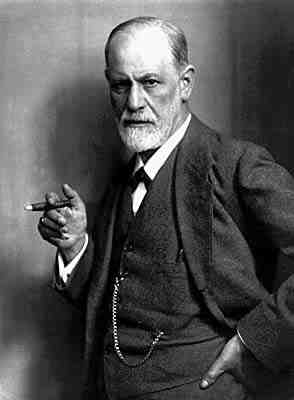
"How is it that Freud is not taught in psychology departments, Marx is not taught in economics, and Hegel is hardly taught in philosophy?"

And immediately I thought, "Because they're not important anymore?"

I know a fair bit about Marx, less about Hegel and far too much about Freud than I would care. As I read along this commentary, I wondered if the author was a psychologist, an economist, a philosopher, or some sort of humanities guy. Well, he turned out to be an historian.

"If educated individuals were asked to name leading historical thinkers in psychology, philosophy, and economics, surely Freud, Hegel, and Marx would figure high on the list. Yet they have vanished from their home disciplines. How can this be?"

Well, it is because learning about the failed lessons of history only helps to an extent. I was frustrated that I had to take a course about "The History of Psychology" for my B.S., but I did recognize the importance of the class. Even though I knew most of it already, I assumed that many others would not be familiar with Freud and B.F. Skinner and all.

But to write an entire commentary about how these thinkers are being pushed into the background? Do you want to know why? Because everyone and their mom went apeshit over these guys, even though their work and theories turned out to be mostly honky.

"Yet, much like psychology, philosophy has proved unwelcoming for thinkers paddling against the mainstream."

Here, the author, Russell Jacoby, seems to suggest that people who support these great thinkers -- Hegel, Freud, Marx -- in their "correct" arenas (philosophy, psychology, economics, respectively) are "paddling against the mainstream" and are thus forced out of the fields into different areas. One philosopher, John McCumber, who loves Hegel "decamped from philosophy to German" so that he could continue to love him.

Give me a break. I realize that it's a tragedy when someone who devotes their entire career to an historic figure must shift gears. But if your selection of choice is taken out of the canon, what better reason to fight for his place in history? Will you just go with the tide and switch to German studies because you find philosophy "too restrictive". Bone up.

It's dumb to keep emphasizing the work of ancient groundbreakers whose work has been overshadowed by new discoveries. Sure, these guys did some great things and deserve recognition. But no, I don't think every person who wants to be educated in psychology should know the complete ins and outs of Freudian psychology. Dreams, sex, a few complexes and move on.

Besides -- isn't it enough that historians and people studying the humanities in general will keep the flames of these three alive? Let the sciences progress and leave the dinosaurs in the history books.

Monday, January 24, 2005

No.

Email subject: "DIS Help!"

Hey everyone,

I'm one of your fellow DIS-ers and I have a slight issue. I didn't
realize until I checked the schedule right now that I work at 9:00 am
tomorrow. Tomorrow is my 21st birthday and I was planning on going out
tonight at midnight to celebrate. If anyone would find it in their heart
to maybe switch hours with me I would so greatly appreciate it. I know
this is short notice, so thanks so much.
Stephanie F.


My fictitious email response:

Email subject: "Re: DIS Help! ...awwww"

Sadly, I have a class to attend in the morning tomorrow. Otherwise, I would gladly help you shirk responsibilities because you feel the need to celebrate (on a Sunday night, no less) attaining the arbitrary, socially-supplied age at which you're legally able to participate in activities in which you obviously have already participated.

The world does not stop and start at your convenience.


Note: I'm not really this bitter. I just enjoy thinking about people reaching the age of "adulthood" and "responsibilities" in a whirling, mindless stupor.

Thursday, January 13, 2005

Form Letter.

Dear Ms. De La Cruz:

Congratulations! You have met the requirements for admission to the Psychology major...


This seemingly innocuous typographical error didn't really restore my faith in the Psychology program here. Made me rethink my major (again); but, as I've said before, I'm already nearly done with this, so it's not really beneficial/efficient for me to change now.

On the plus side, some of my boring classes are turning out to be not-so-boring. And financial aid came in.

We have a nice, overcast, gloomy, breezy day today. Seems about right.

Tuesday, January 11, 2005

My Potpourri Post.

First, Props

Props to Mr. Schmeichel, my General Psychology Grad-student instructor from last semester, for remembering my name and enjoying that smoke on the steps of the Psychology building like the rebellious youth from the 80s we all know you are.

Additional props go to Ray Tomlinson, forgotten inventor of the electronic mail message. I rather enjoy email.

Perculiar Combinations

Penne Pasta + Crushed Cheez-Its.

Sandwich + Tangy Tomato Bacon salad dressing.

Barbeque Sauce + Anything.

thefacebookdotcom

Whoa, Olivia H.? What's that... 8 years since I've attended elementary school? Whoa/cool.

And as for all you "I went to the same high school as you plus or minus 2 years" people who solicit invites to me, well, I'll list you, but don't think anything of it. I know I don't.

[rant]This is part of the reason I avoided this thefacebook service; everyone was jumping on the facebook and it seems like such an ego booster, oooh, add friends, hundreds of people, blah. Although it has its moments (seeing a snapshot of what your former/distant friends are doing at the moment), much of it is just so much ... superficialegotisticalI'msogreateveryonelovesme fodder.[/rant]

Sunday, January 09, 2005

A Psychology Major.

It's the end of something I did not want to end, beginning of hard times to come. But something that was not meant to be is done, and this is the start of what was.

This is the first semester I've started at FSU with a declared major. Since I passed General Psychology and Intro to Statistics, they admitted me to the major. But it's not like I can say something like "there's no turning back now," because I have another two years here; although, considering my current courseload, it would be futile to change majors (I'll probably get done with this one this fall).

One of the aspects of high school I really enjoyed was the opportunity to investigate various fields of study at their (relatively) upper echelons. That is, I could study calculus, advanced Latin, the English language, and music simultaneously. This whole specifying a major field of research is kind of limiting for me- if I enjoy studying all those things, why can't I keep doing that? Well, the answer is that I can, it will just be expensive and time-consuming with almost no practical long-term benefits.

In just one half week of classes, I've had the opportunity to assess things concerning the rest of this semester.

Introduction to Latin: Mostly independent work (translations prepared in advance) with a quirky instructor that I was all-too-entirely not surprised was teaching a course like this. Her laid-back attitude was a main part of the reason I decided not to do the "right" thing and take the Latin placement test at FSU, but just signed up for this class, which is what I believe to be at my level of ability. This'll show 'em for not accepting my SAT II score in Latin.

Research Methods in Psychology: This is one of those common knowledge classes that's a requirement for the major for all those people that believe studies and all experiment results without question. As I've already learned, people lie, and stuff doesn't always turn out like you expect it would. So, I'm guessing this will turn out to be a class to join the ranks of Intro to Stats (hopefully the statement "stuff doesn't always turn out like you expect it would" will apply to this prediction). Essentially, a pushover.

Psychology of Personality: This guy is funny. He's gonna do all lectures, with no pictures or powerpoints. I think I will learn a moderate amount of information from this course, though the topics presented aren't exactly what I initially thought would be in a course with this title.

Abnormal Psychology: I guess this will be cool too. On the first day, I had to snicker every so often because the professor was such the typical old-man-with-monotone-voice-and-use-of-big-words that you see in the movies and whatsuch. I guess I will learn some stuff in this one too, and I should enjoy reading the textbook.

DIS in Zwaan Language and Perception Lab: We haven't yet met to start running experiments, but based on last semester, I can predict this will be a good 6-8 hours a week in the lab that I can use to read again. Sure, it's not glamorous, but sometimes they give me food, and I get to see a lot of people who are taking General Psychology, and get to make fun of a lot of people who are taking General Psychology.

I'm gonna go ahead and give this semester's classes a good 6.5 out of a possible 10 points. A couple of those points reflect the nice colors of my textbooks- they're all pretty, soothing shades of blue (the Latin book is more greenish/aqua, but it works).

And your idols - who are they? They too dreamt about their day, positive steps will see your goals.

Yeah, and Brandon, I'm still laughing at "And don't forget the Twizzlers."

Thursday, December 16, 2004

Grades.

General Psychology test scores:

QUIZ 1 40/40
QUIZ 2 41/46
QUIZ 3 49/48
QUIZ 4 37/40
QUIZ 5 31/34
QUIZ 6 25/25
Final exam 2/60

Heh, heh. My graduate student instructor for Psychology thought he would give us a break on the cumulitive final exam, so that it couldn't hurt your grade at all- only help it (if it turned out to be a higher grade than your second lowest Quiz, it would replace the grade). Realizing I already had an A, I thought I didn't have to go to the exam. Then he said we must go to the exam. I was pretty sure I didn't want to study, and if I didn't study for the final, I probably wouldn't get a higher grade than my second lowest quiz grade, so I decided to bomb it. If he wanted to make the final exam completely useless, I was going to have fun with it. (I also considered marking all "c"s just to see how many points it would get me, but instead I counted the number of C's that I thought were correct=> 13/60, or 21.66%.) I am suspicious of the grade though, as I was pretty confident that I marked all of them wrong (perhaps he added in some extra credit, or a curve). Bummer.

So, in the end, I got an A overall, while managing a 3.33% on the cumulitive final exam for General Psychology.

Monday, November 22, 2004

If I were an instructor...

If I were an instructor, I would allow students to reverse "shoot the moon" (updated: 5/4/2015) on my mutiple choice tests- if they got every single question wrong, then I would give them 100% (but if they got even one right, I would give them 5% or whatever).

I think about this every time I take a multiple choice test.

(*Update: 5/4/2015 - My final for my General Psychology class was like this. My instructor (a grad student) said that if we had an A in the class by the time the final came around, the test would not negatively affect our grade. So it would only bump you up, not take you down. Still, we had to show up. So I sat for the test and deliberately tried to get every question wrong. It was a lot of fun. I don't remember the grade I collected on the final, but I think it was under 10%.)

Monday, October 25, 2004

It really amazes me that people can screw up the simplest things.

So, I work in a Psychology lab on campus, and I run experiments on students that need credit for their classes. I don't expect much from students in General Psychology (who comprise much of the subject pool), as they are usually freshmen and are still getting acquainted to college. But the system here for signing up and doing experiments is about as fool-proof as possible. Still, I get at least 6 people a week who 1) Do not know the name of the experiment they signed up for 2) Do not know what room their experiment is in, and/or 3) Do not know what time/day they signed up for. Most of these people aren't even doing my experiment, they just walk by the room, decide to enter, and ask me about dozens of other experiments that I didn't know existed. I mean, come on, you at least need to know what, where, and when your classes are... can't you just write down the information you need for the experiments???

As for the ones that manage to make it to our experiments on time, ... well they aren't the brightest bunch. Although I tell them the buttons they need to press are the ones with "Y and N" written on pieces of paper and taped onto the keyboard, and not the actual "y and n" buttons, and although they read the instructions, people still hit the wrong buttons, and subsequently contribute essentially no informative data for our experiments. Then, I tell them to keep hitting the space bar for this one experiment, because words come up one at a time (also in the written instructions), 40 minutes later, they come out, having let the computer program advance the words on its own, leaving us with no useful data, and getting me behind in scheduling.

And then there are the post-experimental forms. Don't even ask me about the forms.

On the plus side, my last two subjects on Monday didn't realize that they signed up for the same experiment twice (this happened to me about 9 times already... if you do sign up for the same experiment twice, why sign up for the same day in the same time period twice, so I that I know you've already done this experiment because I recognize your face????), so I got to leave an hour early.

AND, you can't tell me this is hard stuff to do, because I'm doing it. I'm also in General Psychology (tearing it up BTW), taking experiments (other than the one I'm running) and getting credit for it. So, there's no need to screw it up, guys. Seriously. ... That reminds me, I have to go to an experiment right now!

Sunday, October 17, 2004

Sleep Disorders.

I was reading my Psychology book again today:

"Other sleepers, mostly children, experience night terrors. The person might sit up or walk around, talk incoherently, experience a doubling of heart and breathing rates, and appear terrified. The night-terror sufferer seldom wakes up fully during the episode and recalls little or nothing the next morning... As with sleepwalking, night terrors usually occur during the first few hours of Stage 4 [sleep]."

Stage 4 sleep occurs earlier in the night, usually after an hour of sleep, and occurs only 2-3 times during the sleep cycles in one night. They say about 5% of children have sleep disorders like night terrors, and that "After age 40, sleepwalking is rare."

Also,

"Some people remember the
Night Terror. Some don't... Agree with what they are saying and doing... DO NOT yell at them or tell them they are only dreaming as this seems to only upset them even more."

Ain't it the truth?

And,

"Even more interesting is the fact that all of these sleep disorders often run in families."

Crap.

Wednesday, September 29, 2004

Abraham Maslow.

I learned about Maslow's Hierarchy of Needs in Psychology the other day.

In essence, Maslow argued that certain needs must be satisfied in order to achieve other needs. For example, one would not be looking for a loving relationship if one were literally starving to death, or suffocating to death. Their immediate concern would be to find food, or to continue breathing, in order to continue living. This seems pretty natural.

What got me thinking was the top layer of the pyramid, usually referred to as "Self-actualization needs". This subject remains a bit fuzzy, although Maslow provided a few ideas of what he meant for someone to be "self-actualized". Among them were a "need to live up to one's fullest and unique potential". He said that such self-actualized people should have "acquired enough courage to be unpopular, to be unashamed about being openly virtuous". In the website linked above, the author talks about Maslow's examples of self-actualized people: "The self-actualizers also had a different way of relating to others. First, they enjoyed solitude, and were comfortable being alone... They enjoyed autonomy, a relative independence from physical and social needs."

Now, for me, these qualities seem to conflict with some of the needs necessary to achieve any self-actualization. Many of the examples were "solitary" people, which tends to go against the fulfillment of "belongingness and love needs" in the third level of the pyramid. Also, Maslow's comment that the self-actualized acquiring "enough courage to be unpopular" seems to openly contradict his level of esteem needs, which describes "recognition and respect from others".

I'm sure there is a rational explanation for this, but at this time I choose to formulate some of my own. Perhaps when one reaches this ultimate need for "self-actualization," one would not need the lower levels of the pyramid. Perhaps this person would transcend the very boundaries of the pyramid, and be willing to go without the respect or companionship of others. Perhaps, when someone is self-actualized, they are prepared for death (they do not even need the lowest level of the pyramid ["physiological needs"]).

Or maybe self-actualization is just an extension of the pyramid. Perhaps Maslow had a pessimistic view of society and believed that for someone to be self-actualized they would necessarily have to reject the opinions of the masses, in an attempt at real "virtue". Nevertheless, Maslow has outlined many driving factors in human existence... and made them into a nicely colored flow chart.

But I still have my doubts about his method of thinking. I mean, what about Thoreau? He isolated himself from everyone. Was he becoming self-actualized then? Or was he just a nutcase?