Showing posts with label philosophy. Show all posts

Thursday, July 15, 2010

Bodies


Photo by: Joshua Trujillo / seattlepi.com

No More 'Bodies' Exhibit in Seattle?

A while back, a small version of the Bodies exhibit came to Tallahassee and I went to see it. It was okay. After a while, it just felt like they were synthetic. I had to keep reminding myself that they were real body parts, but I suppose they're all injected with chemicals and stuff anyway. Might as well be fake.

The controversy is legitimate, I suppose. I mean, my one friend says "If I'm dead, I don't care what people do to my body." Religious beliefs are another thing, but if these people in Bodies are unknown (if their relatives don't know they're in it; if they're too poor to afford proper burials), then, technically, but perhaps immorally, the pros of science, education, and art received from the audiences should outweigh the cons of desecration... maybe.

This argument against (the Bodies exhibit), though, is the kind of argument that leads to a slippery slope (e.g., arguments over abortion, stem cell research)... Hypothetically, suppose a person died from a rare disease or some other scenario where desecrating the body (for scientific research) could prove beneficial for many living people, but this person's family objected. Or, this person didn't have a family but strongly believed in a religion that was against bodily desecration after death and everyone knew this person believed that...

[This post is a comment I left in Google Buzz.]

Wednesday, July 23, 2008

Gone, and hopefully relegated to a footnote in history...

I just read this commentary in the Chronicle of Higher Education (which, by the way, is a great publication -- I'm even thinking of subscribing after I leave this job where I have free access) called Gone, and Being Forgotten (you probably won't be able to view it without an online subscription, but I'll paste relevant parts). [Edit - I was feeling generous, so I hosted this article on my webspace. - J.D.]

It starts out:

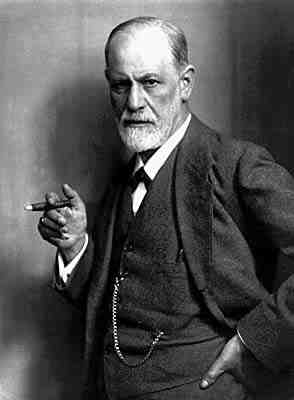
"How is it that Freud is not taught in psychology departments, Marx is not taught in economics, and Hegel is hardly taught in philosophy?"

And immediately I thought, "Because they're not important anymore?"

I know a fair bit about Marx, less about Hegel and far too much about Freud than I would care. As I read along this commentary, I wondered if the author was a psychologist, an economist, a philosopher, or some sort of humanities guy. Well, he turned out to be an historian.

"If educated individuals were asked to name leading historical thinkers in psychology, philosophy, and economics, surely Freud, Hegel, and Marx would figure high on the list. Yet they have vanished from their home disciplines. How can this be?"

Well, it is because learning about the failed lessons of history only helps to an extent. I was frustrated that I had to take a course about "The History of Psychology" for my B.S., but I did recognize the importance of the class. Even though I knew most of it already, I assumed that many others would not be familiar with Freud and B.F. Skinner and all.

But to write an entire commentary about how these thinkers are being pushed into the background? Do you want to know why? Because everyone and their mom went apeshit over these guys, even though their work and theories turned out to be mostly honky.

"Yet, much like psychology, philosophy has proved unwelcoming for thinkers paddling against the mainstream."

Here, the author, Russell Jacoby, seems to suggest that people who support these great thinkers -- Hegel, Freud, Marx -- in their "correct" arenas (philosophy, psychology, economics, respectively) are "paddling against the mainstream" and are thus forced out of the fields into different areas. One philosopher, John McCumber, who loves Hegel "decamped from philosophy to German" so that he could continue to love him.

Give me a break. I realize that it's a tragedy when someone who devotes their entire career to an historic figure must shift gears. But if your selection of choice is taken out of the canon, what better reason to fight for his place in history? Will you just go with the tide and switch to German studies because you find philosophy "too restrictive". Bone up.

It's dumb to keep emphasizing the work of ancient groundbreakers whose work has been overshadowed by new discoveries. Sure, these guys did some great things and deserve recognition. But no, I don't think every person who wants to be educated in psychology should know the complete ins and outs of Freudian psychology. Dreams, sex, a few complexes and move on.

Besides -- isn't it enough that historians and people studying the humanities in general will keep the flames of these three alive? Let the sciences progress and leave the dinosaurs in the history books.

Wednesday, September 29, 2004

Abraham Maslow.

I learned about Maslow's Hierarchy of Needs in Psychology the other day.

In essence, Maslow argued that certain needs must be satisfied in order to achieve other needs. For example, one would not be looking for a loving relationship if one were literally starving to death, or suffocating to death. Their immediate concern would be to find food, or to continue breathing, in order to continue living. This seems pretty natural.

What got me thinking was the top layer of the pyramid, usually referred to as "Self-actualization needs". This subject remains a bit fuzzy, although Maslow provided a few ideas of what he meant for someone to be "self-actualized". Among them were a "need to live up to one's fullest and unique potential". He said that such self-actualized people should have "acquired enough courage to be unpopular, to be unashamed about being openly virtuous". In the website linked above, the author talks about Maslow's examples of self-actualized people: "The self-actualizers also had a different way of relating to others. First, they enjoyed solitude, and were comfortable being alone... They enjoyed autonomy, a relative independence from physical and social needs."

Now, for me, these qualities seem to conflict with some of the needs necessary to achieve any self-actualization. Many of the examples were "solitary" people, which tends to go against the fulfillment of "belongingness and love needs" in the third level of the pyramid. Also, Maslow's comment that the self-actualized acquiring "enough courage to be unpopular" seems to openly contradict his level of esteem needs, which describes "recognition and respect from others".

I'm sure there is a rational explanation for this, but at this time I choose to formulate some of my own. Perhaps when one reaches this ultimate need for "self-actualization," one would not need the lower levels of the pyramid. Perhaps this person would transcend the very boundaries of the pyramid, and be willing to go without the respect or companionship of others. Perhaps, when someone is self-actualized, they are prepared for death (they do not even need the lowest level of the pyramid ["physiological needs"]).

Or maybe self-actualization is just an extension of the pyramid. Perhaps Maslow had a pessimistic view of society and believed that for someone to be self-actualized they would necessarily have to reject the opinions of the masses, in an attempt at real "virtue". Nevertheless, Maslow has outlined many driving factors in human existence... and made them into a nicely colored flow chart.

But I still have my doubts about his method of thinking. I mean, what about Thoreau? He isolated himself from everyone. Was he becoming self-actualized then? Or was he just a nutcase?

Monday, September 13, 2004

A Meaningful Life, or a lack thereof?

Today I will approach the ever-lasting question of life (most likely in a sloppy, unorganized fashion).

I read more of my Psychology textbook today. I read about statistics. The author spent some time debunking the myths of statistics. He writes about a woman who won the New Jersey State lottery two times, about the draw-three lottery for New York on September 11th, 2002 was 9-1-1, and about being dealt a royal flush in poker on the first hand. Though these events seem like monumental displays of good luck or strange breaks in randomly selected probabilities, Myers argues that any of these events, given the bigger picture, is perfectly reasonable. Given the number of people that play state lotteries, he writes that there should be a reasonable chance that five people daily should win the lottery twice. The probability of being dealt 10 through Ace of hearts on the first try is exactly the same as being dealt some hodgepodge of suits and numbers (1 in 2,598,960). His main point in this section was- do not generalize results (correlation does not equal causation and such) and do not be surprised by "perfectly" random results- most of the time while flipping a coin, you will get long streaks of heads or tails, but the 50-50 chance of things usually shows up in the number of times the pattern switches from one to the other (not a very good explanation, but deal with it). He also points out that many people allow statistical correlations to get the best of their mental processing- even New York Times reporters generalize the outcomes of experiments.

So, this brought me to the meaning of life. If I generally believe in evolution (the adaptation of animals to fit their environments or something along those lines) even in the slightest sense, then would it truly be a statistical miracle that humans developed such higher mental capacities? Perhaps we are not able to see the bigger picture that this could be a purely logical, random occurence of nature. Perhaps we invest in a supreme being and religion much in the same way that people identify with changes in the weather that "cause" their arthritis to "act up". Perhaps, given enough of a timeline, anything could happen.

"For your sake I hope heaven and hell are really there. But I wouldn't hold my breath."


Friday, September 10, 2004

Time.

Is time a man-made object? Is it really, as my high school history teacher put it, a deception by the Swiss just to sell their watches?

Nearly all cultures express time through their languages- if not with direct words for "yesterday," "today," or "tomorrow" then with concepts such as tense or mood, which describe things that have happened continuously in the past, are still happening know, or have yet to happen. For centuries, man has established lunar and solar calenders to map the progress of the Earth going about the sun. But even now, our calenders are not precisely correct ("there is a leap year every year divisible by four except for years which are both divisible by 100 and not divisible by 400")... so is it justified to split the natural behavior of our planet in the universe into well-proportioned segments of days, weeks, months, years, etc.? Time runs the modern world- deadlines, meetings, appointments... it has been used to measure the "pace of a society" in psychology (from my textbook, Psychology by David G. Myers Seventh Edition, copyright 2004- Page 30 "By operationally defining pace of life as walking speed, the speed with which postal clerks completed a simple request, and the accuracy of public clocks, they [Rober Levine and Ara Norenzayan (1999)] concluded that life is fastest paced in Japan and Western Europe, and slower paced in economically less developed countries."). The basic units of time build into calculating speeds and the second is the basic unit in the SI for science. But are these seconds as physical as grams or liters? Can all of nature, including the duration from the production of a life form to its complete end of existence, be reduced to numbers? Can mathematical formulas like Fibonacci's sequence apply to everything around us and can the fate of the universe depend on such mathematics? I hope not- because I really don't like Statistics.

I'm Bored

I am bored.